
DUAL BAND
NIGHT VISION ON ONE EYE + THERMAL ON THE OTHER
One of the most capable ways to see at night isn’t “night vision vs. thermal.” It’s both at the same time.
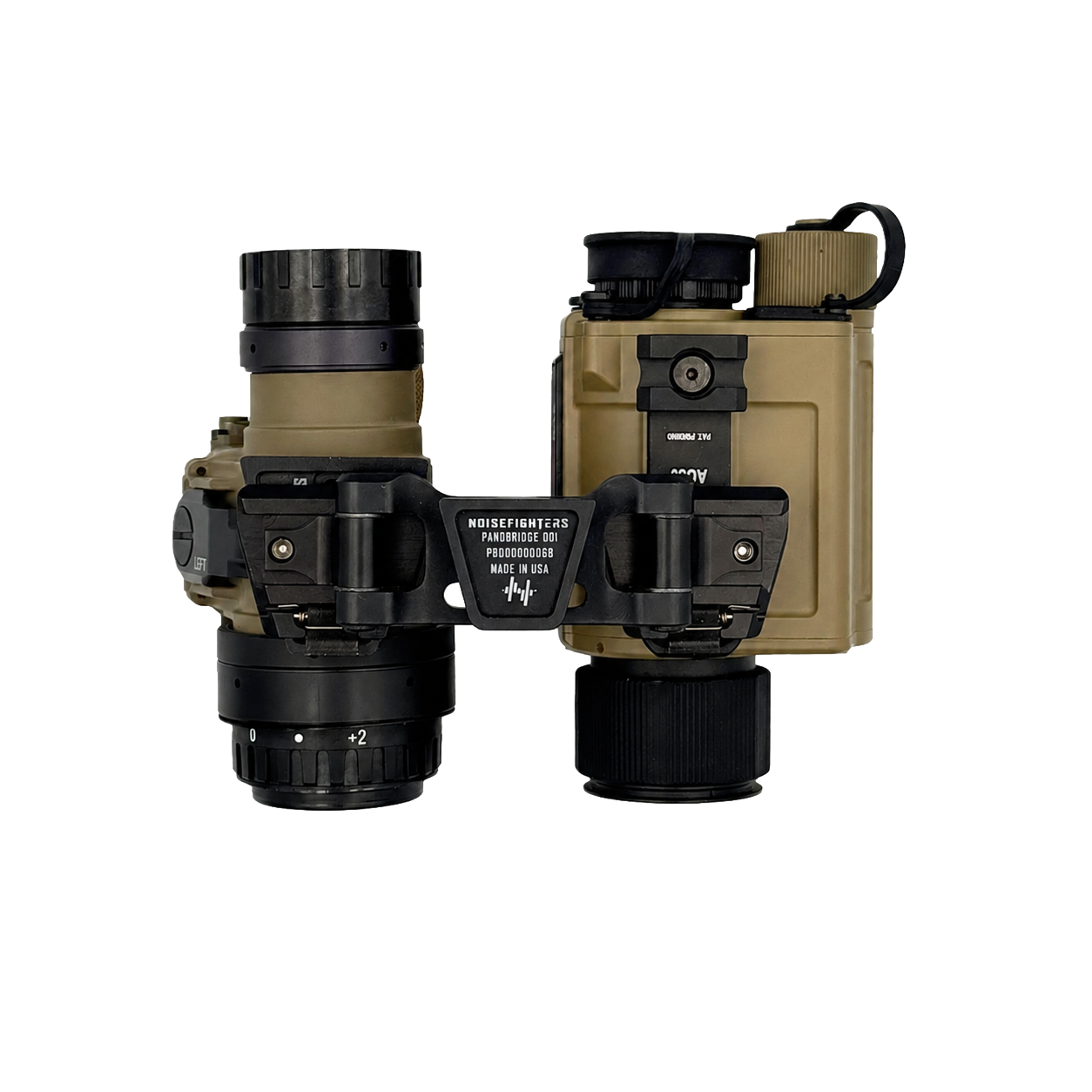
A dual band setup pairs a night vision device over one eye and a thermal monocular over the other, giving you two different streams of information your brain can combine in real time.
This is often called dual band, bridged NV/thermal, or simply “NV + thermal on a bridge.” It’s a serious capability upgrade when set up correctly.
WHAT IT IS
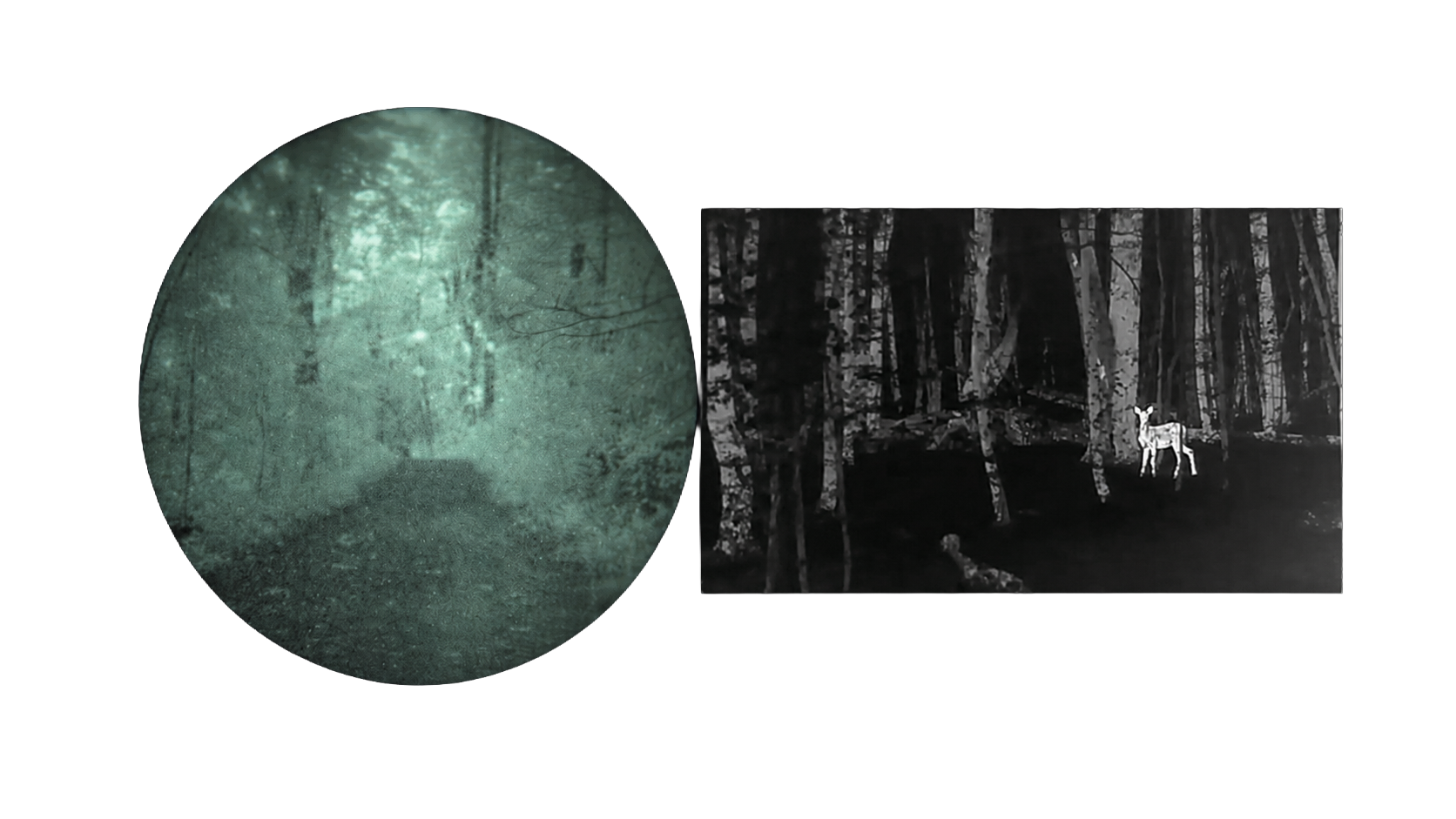
Night Vision (NV): Gives you an analog, non-laggy, natural-looking image of the world, terrain, depth, obstacles, people’s hands, gear, and details.
Thermal: Gives you a digital image that highlights heat, people, animals, recently driven vehicles, and anything warm that blends into the background under NV.
Think of it like:
- NV = navigation and detail
- Thermal = detection
Together, you can move confidently while still spotting heat signatures fast.
WHY PEOPLE RUN THIS SETUP
You Detect Faster Without Giving Up Movement
Thermal is unbeatable for spotting. NV is unbeatable for moving. Dual band gives you both in one helmet-mounted system.
Better Performance In Mixed Lighting
Streetlights, shadows, tree lines, moon/no-moon nights—dual-band helps cover the gaps where one technology might struggle.
Reduced Tool Switching
Instead of scanning with handheld thermal, then flipping to NV to move, then switching back, dual band keeps both views available constantly.
WHAT IT’S BEST FOR
Dual-band setups shine when you need both:
- Scanning + moving at the same time
- Woodlines / brush / dark shadows where targets hide
- Searching large areas but still navigating safely
- Training and night work where awareness matters more than just “seeing”
It’s also extremely popular for users who want a “best possible” helmet setup without going full fusion.
TRADEOFFS, COMPARISON, & WHO IT’S FOR
The Big Tradeoffs
Dual band is powerful, but it’s not for everyone.
Weight & neck fatigue
Two devices on the front of a helmet adds up fast. You’ll need:
- A stable helmet
- Proper counterweight/battery storage
- Good pads
- A solid mount/bridge
Different images in each eye
Some people adapt immediately, for others it can take time, and for some it will never work.
Your brain will learn what matters:
- NV for depth and terrain
- Thermal for “is something there?”
Balance and alignment matter
If the devices aren’t aligned well (height, cant, and eye relief), it can feel awkward and strain your eyes.
Dual-Band vs. Thermal Fusion
Dual band (NV one eye / thermal other):
- Two separate images
- Outstanding detection + navigation
- Usually more modular (swap devices as needed)
Fusion:
- One combined image
- Cleaner workflow for some users
- Less modular
Both are valid. Dual band is often the most flexible “high-end” option.
Who Should Consider Dual-Band?
Dual band makes sense if you:
- Already own NV or thermal and want to build up capability
- Want maximum situational awareness
- Spend time in environments where detection matters (brush, woodlines, large property)
- Train seriously and want a setup that’s always “on”
If you’re brand new to night vision, we usually recommend starting with:
- Helmet-mounted night vision, then
- Add handheld thermal, then
- Consider dual band once you know your needs
DOES YOUR BRAIN “FUSE” IT?
Not perfectly like a true fusion system, but functionally, yes.
Most users don’t see a single blended image. Instead, your brain prioritizes:
- Thermal for detection cues
- NV for navigation
Over time, it becomes more natural: thermal draws your attention to heat, NV lets you move safely.
SETUP TIPS THAT MAKE OR BREAK DUAL BAND
Choose The Right NV Side And Thermal Side
Many right-handed shooters prefer NV over the dominant eye for aiming and detail, and thermal over the other for scanning, BUT it’s personal. We help customers test what feels best.
Use A Proper Bridge
A rigid, adjustable bridge is key for comfort, alignment, and quick device removal.
Counterweight Correctly
If you don’t balance the front weight, your neck will hate you. A simple counterweight pouch with batteries can make the setup feel dramatically lighter.
Keep Expectations Realistic
While usable, in our opinion, it’s meant for easy to moderate terrain. If moving through more complex obstacles or situations, you will probably move the thermal away from your eyes.
BOTTOM LINE
A night vision + thermal dual band setup is one of the most capable ways to see at night:
- NV lets you move
- Thermal helps you detect
- Together, you get faster awareness with fewer blind spots