
TUBE SELECTION
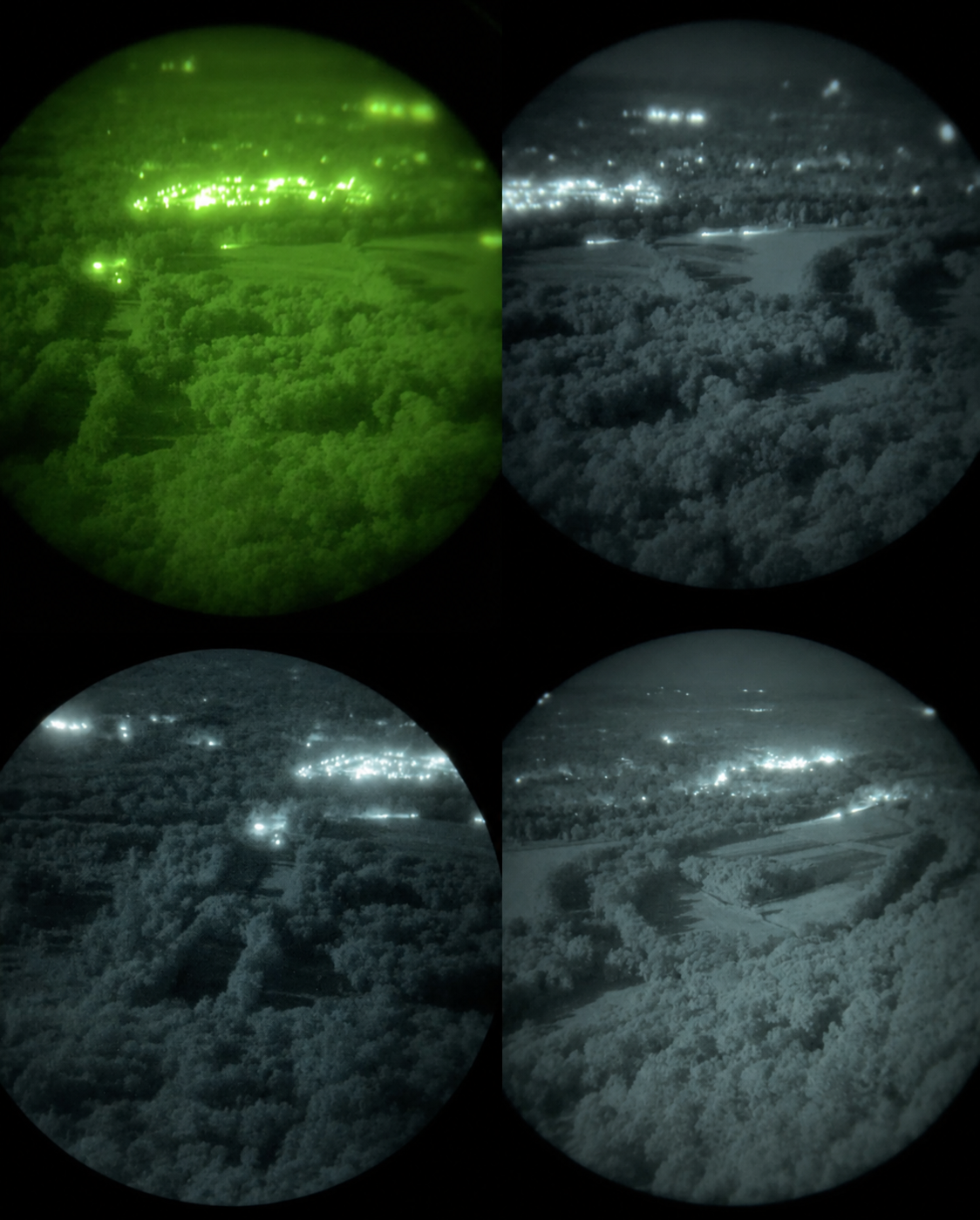
The intensifier tube is the heart of a night vision device.
Without it, your device won’t function.
There is no one size fits all answer. The right tube depends on your budget, your environment, and what you plan to do with the device.
This page is meant to keep things simple.
QUICK BREAKDOWN
NNVT / NVT
Manufactured by North Night Vision Technology in China.
These Generation 2 tubes are an excellent entry level option for someone who is looking to get into night vision at a lower price point.
PHOTONIS
Photonis is headquartered in France.
These are also Generation 2 tubes and are worth mentioning because customers see them discussed online when comparing Gen 2 options.
ELBIT
The perfect middle of the road option.
Dollar for dollar, pound for pound, users will usually get the most bang for their buck by choosing these thin filmed tubes.
L3
When it comes to life or death, or if you simply want the best, we recommend going L3.
SUPERGAIN
These tubes offer increased gain compared to standard gain tubes.
If you are looking for a noticeably brighter image so you can see in those super dark areas, then these are the tubes for you.
TUBE OPTIONS
COMMON TUBE SPECS
You do not need to memorize every night vision spec.
But you should understand the major ones.
Specs help explain why one tube costs more than another, why two tubes with the same FOM may still look different, and why the full tube matters.
SIGNAL TO NOISE RATIO
Signal to noise ratio is usually called SNR.
SNR is one of the most important specs on a tube.
It tells you how much usable image you are getting compared to the noise in the background.
Higher SNR is better.
A lower SNR tube will usually show more noise, grain, or scintillation.
A higher SNR tube will usually give you a cleaner image, especially when lighting conditions get worse.
For most buyers, SNR matters more than chasing the highest resolution number.
RESOLUTION
Resolution is usually listed as LP/MM, which means line pairs per millimeter.
Resolution tells you how well the tube can separate fine detail.
Most modern tubes are going to have a center resolution of at least 64.
Higher resolution can be useful, but it does not automatically make a tube better.
For a typical head mounted night vision device, 64 or 72 resolution can be excellent when the rest of the specs are strong.
This is why resolution needs to be looked at with SNR.
FOM
FOM stands for Figure of Merit.
FOM is calculated by multiplying resolution by signal to noise ratio.
FOM = Resolution x SNR
FOM is one of the main ways tubes are organized and compared.
Higher FOM usually means a stronger tube, but FOM is not the whole story.
PHOTOCATHODE SENSITIVITY
Photocathode sensitivity, sometimes called photocathode response, tells you how well the tube converts available light into a usable image.
Higher is generally better.
This spec helps explain how efficiently the tube is using the light that is available.
EBI
EBI stands for Equivalent Background Illumination.
EBI matters most in very dark environments.
Lower EBI is generally better.
A higher EBI number can make the image look like it has more background glow, especially in very dark conditions.
HALO
Halo is the glow or bloom around bright light sources.
Think headlights, street lights, lasers, or other bright points of light.
Lower halo is generally better because the bright light looks more controlled and blocks less of the image around it.
LUMINOUS GAIN
Luminous gain is brightness gain.
It tells you how much the tube amplifies available light.
Higher gain can give you a brighter image, especially in darker environments.
But more gain is not automatically better for every customer.
SPOTS VS. BLEMS
Spots and blems are not the same thing.
Spots are naturally occurring imperfections that can appear during the manufacturing and initial burn in process of an image intensifier tube.
Blems are user induced damage or defects.
Spec sheets will usually list larger spots by size and zone.
Zone 1 is the center of the image. Zone 2 is between the center and outer edge. Zone 3 is the outer area.
A spot in zone 3 is usually far less noticeable than a spot in zone 1.
Small spots, sometimes called peppering, can be common and may not be listed on the spec sheet.
Some tubes can also have shading, which is when certain areas of the image appear darker than the rest.
A factory spot does not automatically mean a tube is bad.
WHITE PHOSPHOR VS GREEN PHOSPHOR
White phosphor is more popular today, but green phosphor is still capable.
Many customers prefer white phosphor because the image can feel more natural and easier on the eyes.
Green phosphor is still a great option.
The bigger issue is tube quality.
A good green phosphor tube can outperform a poor white phosphor tube.
Color matters, but specs, quality, and intended use matter more.
MATCHING TUBES FOR BINOCULARS
When building or buying binocular night vision, tube matching matters.
The two tubes do not need to be mathematically identical, but they should be reasonably close in overall image feel.
We look at things like brightness, gain, resolution, SNR, spot pattern, image color, and overall tube feel.
Good tube matching helps the binocular system feel more natural and comfortable to use.
You are not just buying two tubes. You are also trying to get two tubes that work well together.
PICK THE TUBE THAT MAKES SENSE
Pick the tube that makes sense for your budget, your use case, and your expectations.
- NNVT / NVT makes sense if you want an excellent entry level option
- Photonis is worth understanding for comparison
- Elbit is the perfect middle of the road option
- L3 is for customers who want the best
- Supergain is for customers who want a noticeably brighter image in very dark areas
GET SETUP HELP
If you are unsure what tube makes sense, contact us before buying.
Tell us your budget, what device you are considering, and how you plan to use it.
We will help you choose the right tube for your setup.
CONTACT US